
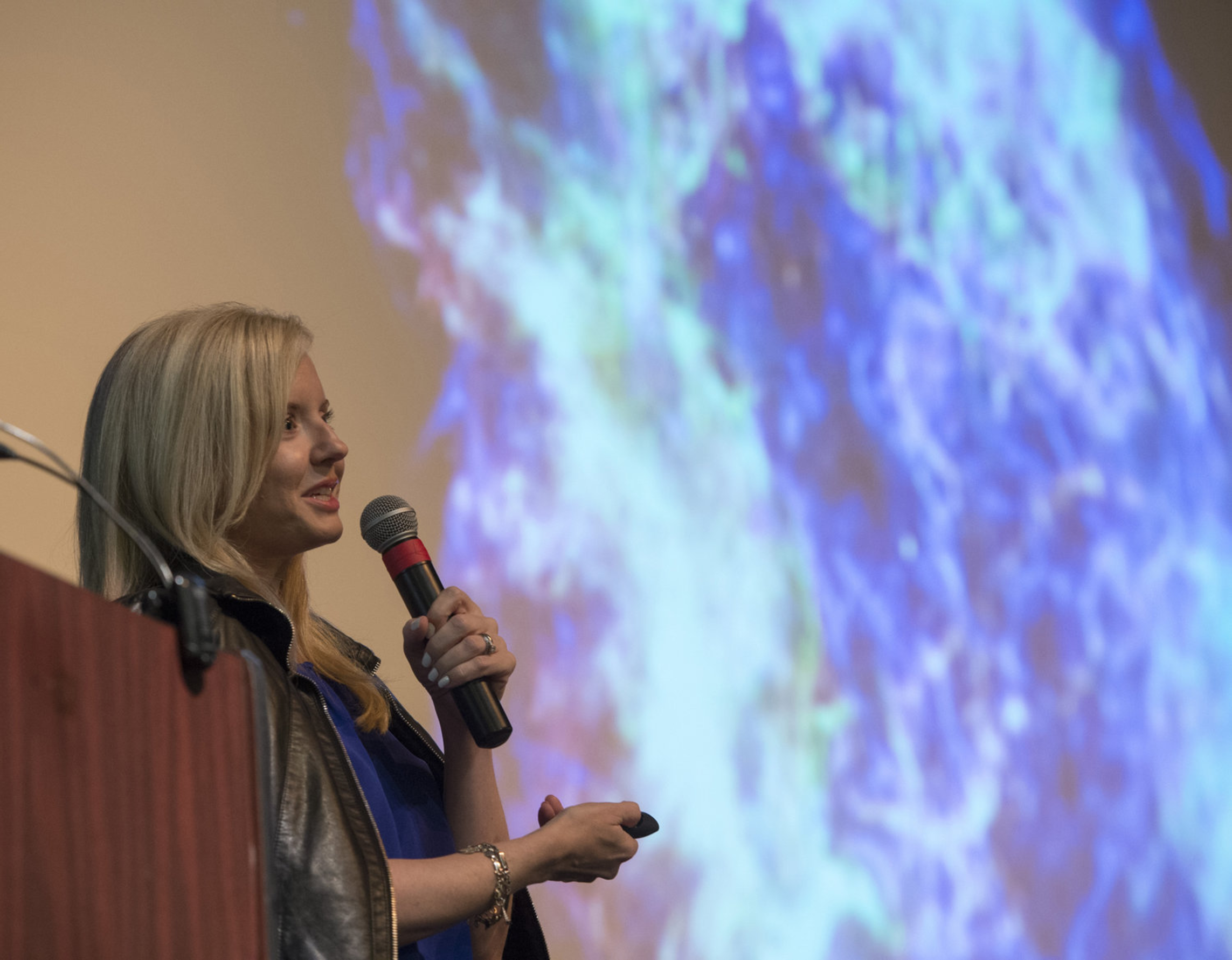
BOLD Perspectives: Bridging Science and Accessible Visualization of the Universe -- Dr. Kimberly Kowal Arcand
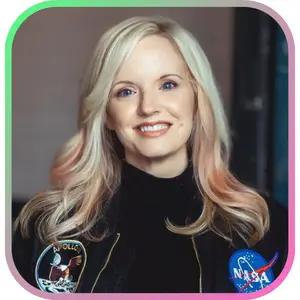 Dr. Kimberly Kowal Arcand, a visionary in the field of high energy astrophysics and data visualization. As a Visualization Scientist and Emerging Technology Lead at NASA's Chandra X-ray Observatory, Dr. Arcand combines her expertise in astronomy, coding, and creativity to translate complex scientific data into captivating images, 3D models, and even virtual reality experiences.
Profile
Name: Dr. Kimberly Kowal Arcand
Age: 47
Title: Visualization Scientist and Emerging Technology Lead at the Chandra X-ray Observatory, a NASA and Smithsonian Astrophysical Observatory project based at Harvard University
Company / Project name: NASA's Chandra X-ray Observatory
Area of Expertise: High energy astrophysics and data visualization; astronomy; coding
City of Residence: Cambridge, Massachusetts
Vision/Philosophy/Motto: I want to invite lots of people into the sandbox! I tell stories about the universe with data and try to make that as accessible and knowable as possible.
I am BOLD because … I like to take risks with how we can use other senses to understand the world around us.
First thing that comes to mind when you think of Austria? Beauty.
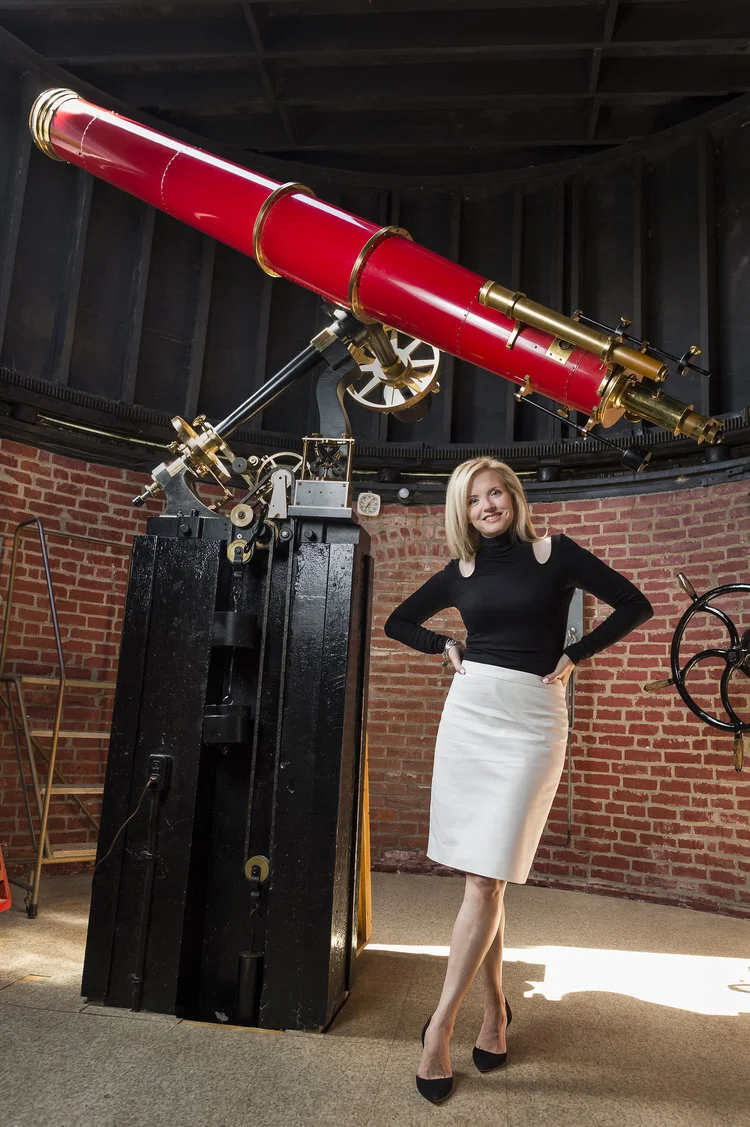
VISUALIZATION SCIENTIST, EMERGING TECH LEAD, SCIENCE COMMUNICATOR
How to be innovative
Tell us about your professional background. Are there any milestones you are particularly proud of?
I’ve been working in high energy astrophysics for 25 years. I got there by combining science and coding. I think a lot of people don’t know that astronomy runs on coding. For me, that work was all about bringing together all kinds of different scientific topics with different kinds of computer science topics. So my crew has been all about taking data of the universe and translating it into images, 3D-models, virtual reality applications, or data sonifications of the stars.
I am particularly proud of working with the communities of people who are blind. I have this vision of creating accessible experiences of the universe. That has been a very fulfilling project. Also, getting to work on a NASA mission for so many years with such incredible colleagues is an absolute joy.
What has been the most valuable lesson life has taught you thus far?
Every step is important and matters — whether you are going backwards or forwards. In the end, failure is just as important as forward thinking and success. Sometimes you have to take the leap and do it; you are not always going to succeed, and if you fail, it’s fine.
How does being a part of the BOLD Community influence you and your work?
I have not really integrated yet. I am so excited to meet the different communities and learn about many new areas. That is my happy place, where ideas pop up like light bulbs.
What strategies do you implement to cultivate a culture of innovation within your organization?
I try to give them all enough space to play so that they do not always have to focus on reports or deadlines but have some breathing room in their days or weeks. They can just think and let their minds play: so they can read an article they think sounds interesting or watch a video.
Sometimes it is good to sit and stare into space and do nothing for 20 minutes to let your brain stew over the variant things you have on your mind. I am trying not to stack everyone’s workload. My old supervisor always did that and I passed that on. Sometimes it is not doable, but I am trying to make that happy.
I try to always be positive around everybody even when I am having a bad day. I try to focus on the light and a little bit less on the dark.
Is there a particular belief or philosophy that guides your approach to life and work?
Play and positivity. I love games, I love playing with my kids and my dogs. Always pursue imagination!
What do you think people should learn from each other to foster innovation and collaboration?
Perspectives. I always learn something when I put myself in someone else’s shoes. I learn a lot through interacting with them or asking them questions. Everybody brings something different to the table. It is so true. In my team, I try to use our differences for the greater good. It makes you feel less alienated. It is not you against the world when you open yourself up to others. Just trying is the important step.
What qualities do you believe will be crucial for success in the future of work?
The human sparks of creativity and imagination and extrapolation and contextualization — those are my top four skills that I look for now, and I think they will be even more important. Especially if and when AI becomes a bigger force. Those areas of humanity will be more important. Machines can only take us so far.
Can you share an instance where a failure or setback led to a positive outcome or growth?
In college, I once failed a class. Especially as a woman in science, it felt like I had imposter syndrome. Also, I was quite poor, so I was paying for all the classes myself. And I would not get credit for this class that I had paid for. I felt really disappointed with myself. It made me rethink what I was going to do with my life. But that led me to coding, which led me to astronomy and NASA, and I have had an incredible career. That one single point failure in college turned out to be one of the best things that ever happened to me. And I failed many times. Almost always they lead to a new fork in the road which I wouldn’t have traveled otherwise. Not every failure is a good one, but often it is important.
I am naturally a glass-half-full person. I just feel, because I have been able to work myself out of failure often enough, I can pull myself out. You don’t always have to be happy about failure. I can get stressed and miserable and cranky. I just somehow adapted to not letting it pull me under. Have those unhappy days, then start looking for the treasure! What can I change or adapt? What can I control and what not? The things I cannot control, I have learned to let go easier.
What is a BOLD decision you made in your career and why?
The most BOLD decision was probably taking the job to begin with. It was not in an area I had training in and did not know where it would lead me. It affected so much of what I am doing. BOLD things I have done more recently were doing these little jumps into other areas that I am not an expert in. I am not an expert in extended reality or data sonification but I am doing useful work there. I am not an expert in AI or machine learning but I am doing work there. Leaping into a field I don’t know much about, connecting it to my work, and seeing if I can breed something new from it.
I feel like many women struggle with inserting themselves into jobs when they think they lack the necessary expertise. Any tips?
I think I was just a dreamer as a kid, so stereotyping didn’t affect me as much. My head was always in the clouds or in a book. I lived in my own sheltered bubble for a long time and found some kind of immunity in it. I didn’t worry that much. Of course, I had imposter syndrome like many other people.
So. Dream up. Dream up and dream away. It’s the size and the age of the universe that leads me to sound so annoyingly philosophical, but we are just the tiniest blip of the universe’s timeline on the tiniest spec on a spec on a spec, and you have such a short human life compared to the brown dwarf star that could live for 50 billion years. We have this finite time and this finite space to do stuff with that could be cool. You won’t know unless you kind of do it. When all is said and done, why not try these BOLD moves? Take advantage of what you have.
Explain your innovation
Can you explain your innovation and why it matters?
I tell stories of the universe by taking data from telescopes and translate them into something we can see, touch, or hear. An example: I take the information that we collected of an exploded star and turn it into an image or a 3D-print that you can see or turn it into a data sonification that you can listen to. I have this front row seat in this beautiful cathedral of the universe that we all sit in. Especially being government funded, I want to make sure everyone can sit alongside. The hope is to make science more accessible — to expand the idea of who can become a scientist.
Why is it important that people hear the universe?
We all live in it. We already have a lot going on just on our own planet. But it is only one among a handful of planets in our solar system, and our solar system is one among many solar systems in our galaxy. And our galaxy is one among many, many galaxies in the universe. The iron in our blood comes from previous generations of stars that exploded, as does the calcium in our blood. The oxygen that we breathe comes from stars that blew themselves apart millions of years ago. It is useful to know where we come from and where we might go.
Please explain Chandra Telescope!
The Chandra Telescope is a telescope that looks at things like exploding stars, black holes, and colliding galaxies by detecting x-ray light. Most of the universe is invisible to humans; we cannot see this light with the naked eye.
Do you enjoy science-fiction novels?
Yes! I am a big fan of science-fiction writers. The worlds they create with their imagination are often in existence, like Tatooine from Star Wars. Astronomers have found expo planets like that beyond our own solar system, in our own galaxy. I love that people think these full thoughts.
How did you get involved in this?
Since I was very, very young, I wanted to work in science. For my first “dress up day” in preschool, I dressed up as a doctor. My parents encouraged me, they got me a little space ship for my 6th birthday. I was fascinated by everything around me: the trees outside blowing in the wind, meteors striking across the sky, a frog hopping across the stream. I was super interested in the natural world around me. I never lost that desire to learn about the world, the universe, and our place in it. There has always been this driving force inside me that I cannot explain. It has always been there.
It wasn’t a straight path because I loved all sciences: environmental science, animals, and earth science. I didn’t know what I would be when I grew up. One day, I saw this job listing online and thought, “Oh, maybe I could do that.” And here I am, 25 years later. NASA is not only for people who studied aerospace engineering. It takes all kinds of skills and specialties.
How can others contribute to this effort?
I am always looking for feedback, engagement, and participation. That is how we know if we are doing an okay job. When I learn that there are people with different kinds of needs, I can address them. When I learn that people are not responding to something we created in the way we expected, I can improve something. That is very helpful. You can do that on social media or on Youtube. There are also a ton of science projects in which people can get involved in. Just look online for “NASA's citizen science.”
Quickfire Questions
What's your power breakfast before a big day of innovation?
A yogurt – every day.
The last book you've read that inspired an innovative idea or approach:
“Jane Austen's Universal Truths: Wisdom and Witticisms from her Writings” by Susan Hart-Byers.
If you could master a new skill instantly, what would it be and why?
I would love to learn to play a new instrument or a new language.
What are your strategies for maintaining work-life balance and prioritizing self-care?
My work tends to always be on my mind. I have a hard time shutting things off. I have a super supportive family, husband, and mother. They are very good at pulling me out. I like going for a walk in nature or being with my dog to make sure I am not drowning myself in work thoughts.
If you could choose any innovator (real or fictional) as a mentor, who would it be and why?
Ada Lovelace was this brilliant mathematician, in a way, the first computer programmer. Philosophical. She lived in the early 1800s, I would love to pick her brain.
Your favorite podcast that sparks creativity or offers insightful business trends:
I don’t listen to a ton. I don’t have one.
What is the most exciting innovation you've recently encountered in your field?
The use of AI machine learning. That will do some incredible things in the world of astrophysics. There is this huge field that is opening up, I can’t wait to dive into it. AI will help with the detection of things and image processing will become highly efficient.
If you could invent any gadget to make your work life easier, what would it be?
I have muscle and bone issues from working on the computer so much. I would like to invent something where the computer is like part of me, cyborg-ish. Maybe I can be part computer, part human.
What achievement, opportunity, or aspect of your work are you most thankful for?
I am the most proud about helping to bring many more people into the sandbox with me than were around when I started. I am proud of the teams I helped grow. I am proud of the people around me in the greater world that have had the opportunity to participate in understanding more parts of the universe.